In a July 3, 1776, letter to his wife Abigail, John Adams voiced his hope for future celebrations of the Declaration of Independence and the birth of their nation: “I am apt to believe that it will be celebrated, by succeeding Generations, as the great anniversary Festival. It ought to be commemorated, as the Day of Deliverance by solemn Acts of Devotion to God Almighty. It ought to be solemnised with Pomp and Parade, with Shows, Games, Sports, Guns, Bells, Bonfires and Illuminations from one End of this Continent to the other from this Time forward forever more.”
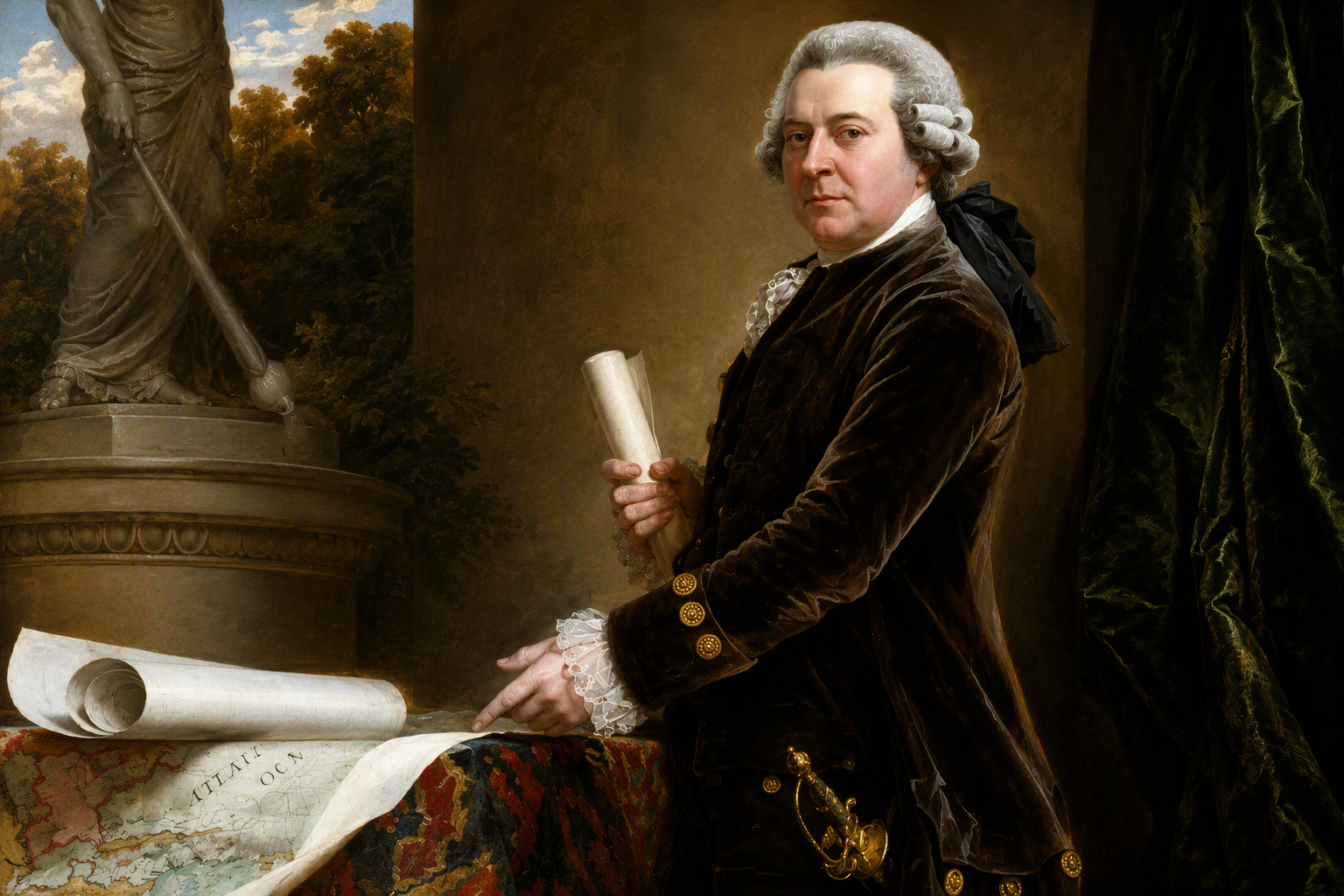
Adams closed his letter soberly, for he knew the cost of American freedom would be great: “You will think me transported with Enthusiasm but I am not. I am well aware of the Toil and Blood and Treasure, that it will cost Us to maintain this Declaration, and support and defend these States. Yet through all the Gloom I can see the Rays of ravishing Light and Glory. I can see that the End is more than worth all the Means. And that Posterity will triumph in that Day’s Transaction, even if We should rue it, which I trust in God We shall not.”
Adams was prescient.
For one thing, the struggle for Independence cost many Americans their lives. At the war's lowest points, it appeared as if the Revolutionary generation might just fail. Earlier in the letter, in fact, Adams mentioned a scourge of smallpox that had recently spread through the Continental Army. It was far from inevitable that the Patriots would win. But for the army’s miraculous escape from Long Island, their surprise attacks on Trenton and Princeton, and the arrival of French support, the Americans might have fallen to the British. Providence seemed to have a hand in the war’s outcome, lending credence to Adams’ call for the nation’s anniversary to be celebrated “as the Day of Deliverance”.
For another thing, later generations marked the anniversary of American independence in ways that followed Adams’ vision. Fireworks, firearms salutes, concerts, and all forms of pomp and parade spread across the continent just as Adams predicted and as “these [thirteen] States” grew to fifty.
In 2026 America faces the most remarkable anniversary in her history. America is turning 250. Americans have a lot to celebrate. Not only has the country gathered all these years since its birth in 1776, the generations that followed the Founding generation have paid yet greater costs to maintain American independence and freedom. And across the span of America’s national story, American achievement has gathered at an exceptional level:
America is a land of trailblazers. Lewis and Clark mapped the uncharted territory from the Mississippi River to the Pacific Northwest. Fellow countrymen struck the Oregon, California, and Chisholm trails. American forebears built the Erie and Panama Canals, transformed desert lands into some of the world’s most productive farms and wetlands into some of the world’s greatest cities. Further, they engineered more than 48,000 miles of interstate highways.
Americans pioneered skyscrapers, film, radio, television, open-heart surgery, mechanised farming, refrigerated railcars and meatpacking, the assembly line and mass production, the personal computer, football and baseball, and the modern pickup truck.
America was first to build a transcontinental railroad, first to fly, first to fly solo nonstop across the Atlantic, first to break the sound barrier, first to reach the lowest point below sea level, first to use a submarine in war, first to build a nuclear submarine, and the first and only country to land a man on the moon. NASA’s Columbia made the first orbital space shuttle mission.
Americans invented the cotton gin, the incandescent light bulb, the phonograph, the transistor, the polio vaccine, the internet, GPS, basketball and volleyball, NASCAR, and the musical genres of jazz, country and rock.
The Brooklyn Bridge was the first steel-wire bridge of its kind. Yellowstone National Park was the first national park anywhere in the world. Over the last century, of all the world’s countries, America produced the most cars, food for export, oil and Bibles. It made more donations to charity and won the most Olympic gold medals.
Crowning this great body of achievement, there is American freedom. Early on America earned its title as “the land of the free” and bravely kept it all these years. Americans were the first to found a republic on popular sovereignty and the consent of the governed and first to have a fully written constitution. Theirs is the most enduring modern republic and their Constitution is the most important written constitution in any era.
Since the 1800s, America has been the unrivaled destination for immigrants seeking a life of freedom for themselves and their children. The twentieth century was the American Century because America not only became the most powerful, wealthiest and innovative country in the world, it also became the leader of the free world, most notably in its defense against unprecedented assaults on freedom, first in World War II and then in the Cold War.
Writing in 1995, America’s favourite popular historian, David McCullough, gave voice to the gratitude that naturally arises when one considers America’s remarkable story: “How lucky we are, how very lucky we are, to live in this great country, to be Americans-Americans all.”
On the occasion now of the semiquincentennial, one might expect the entire nation to share McCullough’s sympathies and brim with pride. Alas, McCullough saw three decades ago that too few Americans know their history. “[T]he American past,” he warned, “is slipping away, out of sight and out of mind.” And by “losing our story,” Americans are “forgetting who we are and what it’s taken to come this far.”
In 2005 he found the situation even worse. By then, an alarming number of Americans were incapable of answering the most common questions concerning their history: “Who was responsible [for our freedom]? What did they do? How much did they contribute? How much did they suffer?”
If the loss of history means a loss of public identity as a free people, divided from history, the loss sounds a death knell for personal freedom and responsibility. It is the root cause of a terrible downward trend, what Victor Davis Hanson calls the “dying citizen”: the individual who claims the rights and privileges of American citizenship but, out of neglect or a willful rejection of their shared history, forgets not only what made American claims to freedom possible but what responsibilities Americans must shoulder in order to preserve freedom for themselves and for others.
In recognising the growing neglect of history, Hanson shares common ground with McCullough. The additional light he sheds is the willful or active forgetfulness of Americans’ history. Hanson has in mind the culture of repudiation, which condemns America’s past as a field of oppression and the national purposes revealed there as meaningless. Such an ahistorical perspective foments division over who Americans are and scepticism that there is anything worth defending and preserving in America. The default response is either apathy or an impulse to radicalise the country, even violently.
Yet another layer of forgetfulness compounds the current situation. As Donald Kagan explains in his 2005 Jefferson Lecture for the National Endowment for the Humanities, “Religion and the traditions based on it, were once the chief sources for moral confidence and strength,” but they too have faded from public memory. The God of the Bible and the moral order he established, in other words, now play lesser roles in ordering life than they did in previous generations. At the same time, Kagan observes, “the need for a sound base for moral judgments has not [faded]. The fact is, that we all need to take our moral bearings all the time, as individuals and as citizens”.
The further fact is that human morality has always been the foundation of citizenship and that morality has always found its bearings in religion. By nature, individual persons and the public they constitute have always had to order their lives according to the transcendent order of life. This is true for Americans no less than for societies that preceded us. We cannot account for the order of freedom in America without consideration of her religious origins in the God of revelation. Given the decline of traditional religion’s hold on America, however, Americans find themselves in a predicament: By natural inclination they continue to choose what they think is right, but against their nature as humans they increasingly act in ways distanced from their highest purposes revealed in history.
The cure for amnesia
Here America is at 250. A glorious national story but fading in memory, a waning public identity, a rise in “dying” citizens and a moral impulse disoriented under the gulf between religion and purpose. This is America’s growing spiritual poverty and her case of national amnesia. Forgetful, Americans are less free. Unmoored from the past, their capacity for responsibility declines.
The matter is urgent; but there is hope, and, remarkably, it lies in the very source being squandered by too many Americans. As historian Wilfred M. McClay puts it:
“Whenever any nation is faced with a deadly challenge to its institutions and its well-being, as we are today, it must find a way to draw upon its deepest sense of itself”: that is, a sense of who we are and how we ought to live. “Sometimes, with nations as with individuals, the very act of rising to the occasion - and seeing how others have done so in the past—can reawaken strengths in us that might otherwise have lain dormant, or never emerged at all.” [1]
Here, in McClay’s observation, is the framework for a good response to America’s own challenge. What she needs is a rebirth of remembrance. Given their national amnesia, Americans especially need to remember others who remembered well in their own times of difficulty. By exercising remembrance with that focus, they just might reawaken the strengths requisite to the life of freedom they inherited and for which they are now responsible: the Revolutionary generation, their British forebears who established the Common Law and representative government, the authors of English letters, medieval natural law thinkers, Roman republicans, the Greeks who discovered the intellect, and the Jewish and Christian ancestors who forged life under history, as in the Passover meal that recalls God’s intervention in Egypt, and the Eucharist centered on the charge from Christ, “Do this in memory of me.”
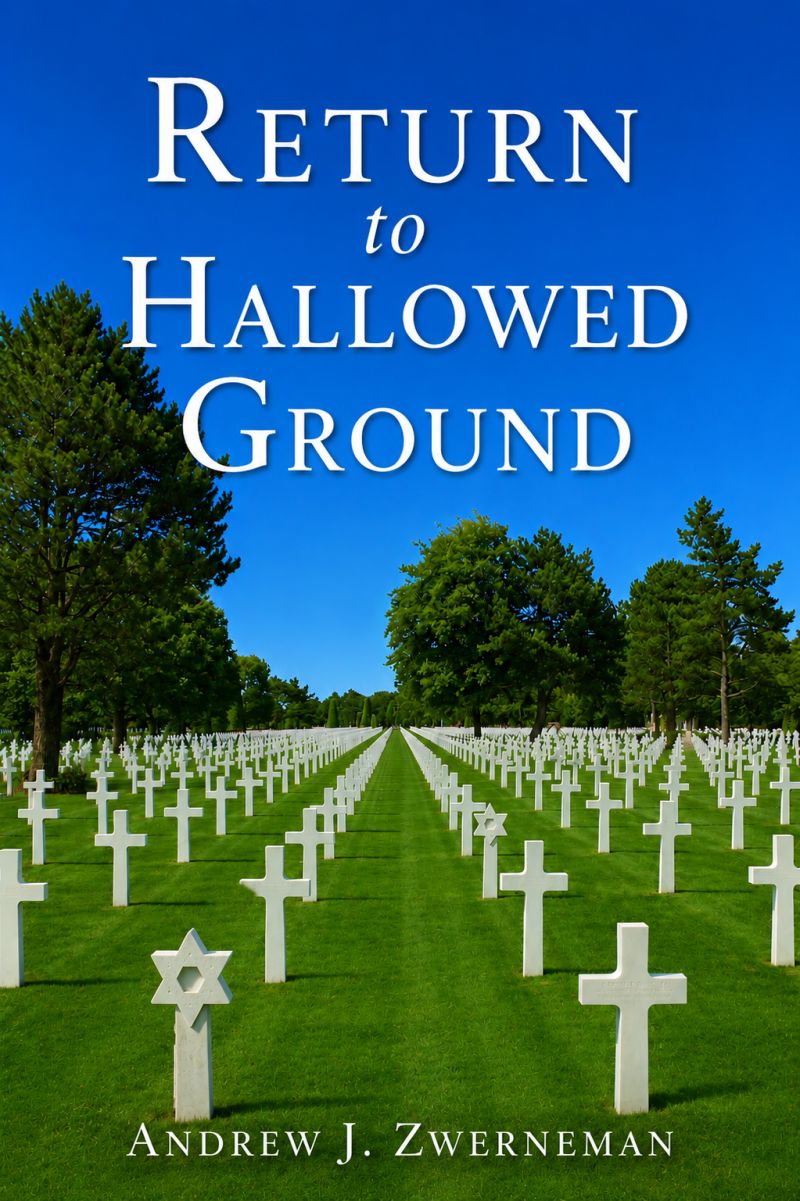 Because remembrance falls not just to historians and history teachers but to every American, the rebirth must take hold in each citizen responsible for the order of American freedom. To that end, Americans must exercise their active memory. Each American must return to fellow countrymen who have faced crises or remedied past moral failures by drawing on America’s shared history and purpose: among others, Lincoln, who led America through her greatest crisis; Eisenhower, who, at the end of World War II, insisted that American troops record everything they saw in the concentration camps, lest future generations deny what happened; Truman, who integrated the American military in the name of America’s Founding principles; and Presidents Kennedy and Reagan, who not only rekindled America’s sensibilities regarding freedom and human rights, but stirred hope among fellow Westerners suffering behind the Iron Curtain.
Finally, each American must return to hallowed ground where their fellow countrymen laid down their lives in sacrifice for the freedom of others. Such individuals prove that freedom is not about individualism, it is about individual freedom spent for the sake of others. The fallen at Bunker Hill, Gettysburg, and Normandy forever serve to remind the living of the origins of the life we have together across generations. So do the immigrants, missionaries, trailblazers, teachers, healthcare workers, and everyone else who freely sacrificed so that others might live freely.
To live under history is to live in memory of those who gave their lives for us, sometimes to the last full measure. No society can be without a shared history, nor can a people live under their shared past without returning to the ones who gave them that life. As T.S. Eliot puts it:
“We are born with the dead:
See, they return, and bring us with them.” [2]
All such examples should stir the apathetic and disprove the repudiator. If, in turn, America’s fellow Western nations are experiencing what America suffers from today, and have in some significant measure fallen to national amnesia, they too would do well to seek a new birth of remembrance: to find in their deepest origins their most vital sources of renewal.
This article is adapted from his latest book, Return to Hallowed Ground (Falls Church: Cana Academy, 2026), available in hard copy and PDF.
[1] Wilfred M. McClay, “Has America Lost Its Story?” Law & Liberty, October 1, 2021. He wrote those lines in the immediate aftermath of 9/11, but his insight illuminates the national forgetfulness that marks America at 250.
[2] T.S. Eliot, Little Gidding,” Columbia University, https://www.columbia.edu/itc/history/winter/w3206/edit/tseliotlittlegidding.html, accessed May 26, 2026.
__________________________________________________________________________________________________

Andrew J. Zwerneman is co-founder and president of Cana Academy. He writes and narrates the film series, HISTORY250®.