Blog
Dr Kevin Donnelly
Proven by a recent seminar in Melbourne where 30 parents, teachers, school leaders, academics and representatives from the Archdiocese of Melbourne and Catholic schools came together from around Australia to learn more about what constitutes a classical education, otherwise known as a liberal education, it’s obvious what is happening overseas is also happening here.
James Treweeke
There is nothing stopping the schoolteacher bringing about Australia’s classical education reform at their school right now; everything they need is readily available. I recognise that this may sound like a naïve claim. You may retort my eager optimism by mentioning the curriculum constraints put in place by the Australian Curriculum or by referencing the current utilitarian culture that suffocates the modern classroom. And your concerns would be justified. Were we to try and bring about complete institutional reform the individual teacher would surely find themselves overwhelmed. However, the teacher does not need to attain such lofty goals to provide students with the genuine learning envisioned in the liberal arts. Any teacher can provide the classical education reform their students need by facilitating an afterschool liberal arts club.
Classical education has witnessed incredible contemporary growth in the United States. This movement has been driven by two distinct phenomena: a bourgeoning local, independent school sector (frequently tied to a Christian religious denomination) and a rich homeschooling tradition. The common factor in both, which I consider significantly accounts for their success, is that they are grassroots initiatives. American classical schooling relies on a dedicated mass of parents who turn to teaching themselves or are willing to forgo some expense to ensure their children receive the best form of education because they believe the current model is seriously deficient. These parents have read books, studied, raised funds and banded together to promote their interests and those of their families.
- Written by: Jonathan Hili
Dr Kevin Donnelly AM
What does it mean to be educated and what is the purpose of education? How such questions are answered is crucial as education, in addition to being essential for the wellbeing and continuation of one’s community and society, distinguishes civilised cultures from those that are primitive and less advanced.
Education also deals with the physical, moral, emotional, intellectual and spiritual aspects of each individual and how she or he finds happiness and fulfilment. To be educated is to appreciate what constitutes the good life and to be able to identify right from wrong and true from false. Education, in addition to providing entry to employment, also addresses existential questions about the meaning of life and the nature of universe in which we live.

Jennifer Ruth Dow
What makes one a classical teacher? How is a classical teacher different than a “regular” teacher? How does one become a classical teacher? While we could certainly have this conversation over several hours with more discussion to follow, let me offer a starting point with a few pillar ideas that speak to the question.
The following article discusses how the experience of crossing thresholds and threshold concepts, can be a way of supporting students’ new understanding of the transcendentals, truth, goodness and beauty. The teacher’s role and practise in aligning their teaching towards a classical approach to education using some of the fundamental principles of Classical education pedagogy are also included.
Dr David Daintree
'...the Holy Church has cultivated and kept in highest honour the source texts of this wisdom, and especially the Greek and Latin languages, as if they were a sort of golden robe clothing Wisdom itself.' (Pope John XXIII)
'...one ought not to be considered a master of learning who does not understand the language of these writers.' (Pope John Paul II)
'It is not…so great a distinction to know Latin as it is a disgrace not to know it!' (M. Tullius Cicero)
These are hard sayings. At a time when notions of rote-learning and disciplined hard graft are somewhat on the nose, and the focus of education is shifting towards entertainment pumped up with political activism, who wants to be bothered with tough learning tasks - unless there's at least the hope of a good salary at the end of it?
Dr. Jeremy Bell
Earlier this year I delivered a lecture on Robespierre and the Reign of Terror to a classroom of undergraduates. After I had finished, I overheard one student say to another, “who needs TV drama when you have history?” While I was naturally pleased at her enthusiasm for the content, her words did not sit easily with me. Historical narratives can indeed be as gripping as anything seen on screen – it is no accident that the genre of “historical drama” boasts some of the finest television series ever made, such as the BBC’s I, Claudius – but the academic study of history is supposed to offer the student something more than mere stimulating or cathartic spectacles. What, however, is this “more”? This question has bothered me ever since my own undergraduate days. Setting aside its possible entertainment value, why exactly do we study history?
Annalise Day
“Two roads diverged in a wood, and I –
I took the one less travelled by,
And that has made all the difference.”
-- Excerpt from The Road Not Taken by Robert Frost
Robert Frost’s words have stuck with me ever since my first semester literature lecture at Campion College. Perhaps because the scenario they described felt so familiar to me, given my seemingly constant struggles with indecision. Or perhaps because as Catholics, we are called to choose Christ in all things. Or it could be because as young adults in the 21st century, we are often shunned if we choose to stray away from the cultural path that champions leftist conformity. Whatever the case, making the decision to take the road less travelled and attend Campion College in 2015 has proved invaluable to me. It has given me an enriching education, irreplaceable friendships, and the tools I need to aspire toward seeking and living out truth, beauty and goodness in all aspects of my life.
Ben McCabe
Aristotle said, “All men by nature desire to know.” The primary purpose of Augustine Academy is to impart a deep love of learning and a genuine desire for depth and meaning in the lives of young people. The objective is that throughout their time at the Academy, students will grow to understand learning as dynamic and exciting pursuit of the Truth, rather than a utilitarian means to a job.
Here is the recording from our July open reading group! Additionally, you will find links related to this month's reading and discussion.

Jonothan Lethbridge
HSC, VCE, QCE, WACE, SACE, TASC, NTCET & AST.
The final exam of each state. After taking the HSC not all that long ago I was reflecting upon what the education system asks of students and I remember what one of my favourite teachers used to say during year 12 “Play the game.”
“Educating the mind without educating the heart is no education at all.” This popularly cited quote from Aristotle isn’t actually by the Greek philosopher at all. Despite its false attribution, the statement does encapsulate something essential to his thinking on education and was a perspective that had informed Western pedagogy for millennia: that education is about soul transformation.
- Written by: Jonathan Hili
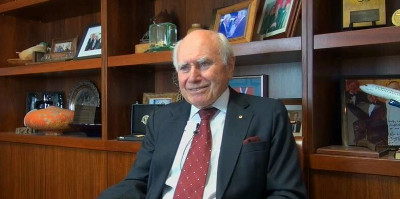
Former Prime Minister, the Hon John Howard OM AC, sat down with Campion College President Dr Paul Morrissey to discuss the state of education in Australia, and why a traditional liberal arts education is so crucial to the future of the country.
Stefanie Lorimer
The notion of a well-trained mind is familiar to the classical educator and the aim of this training is equally transparent: to engender wisdom and virtue. In 1972 Professor László Dobszay, referred to the music pedagogy of the great 20th Century musicologist, composer and philosopher Zoltán Kodály when he asserted that adding a well-trained ear, heart and hand would allow the human spirit to “even today overcome the apparent destiny of history” (Dobszay, 1972). What may we glean from Kodály’s pedagogical approach? How are a well-trained ear and a well-trained heart connected? How is this connection important to classical education?